
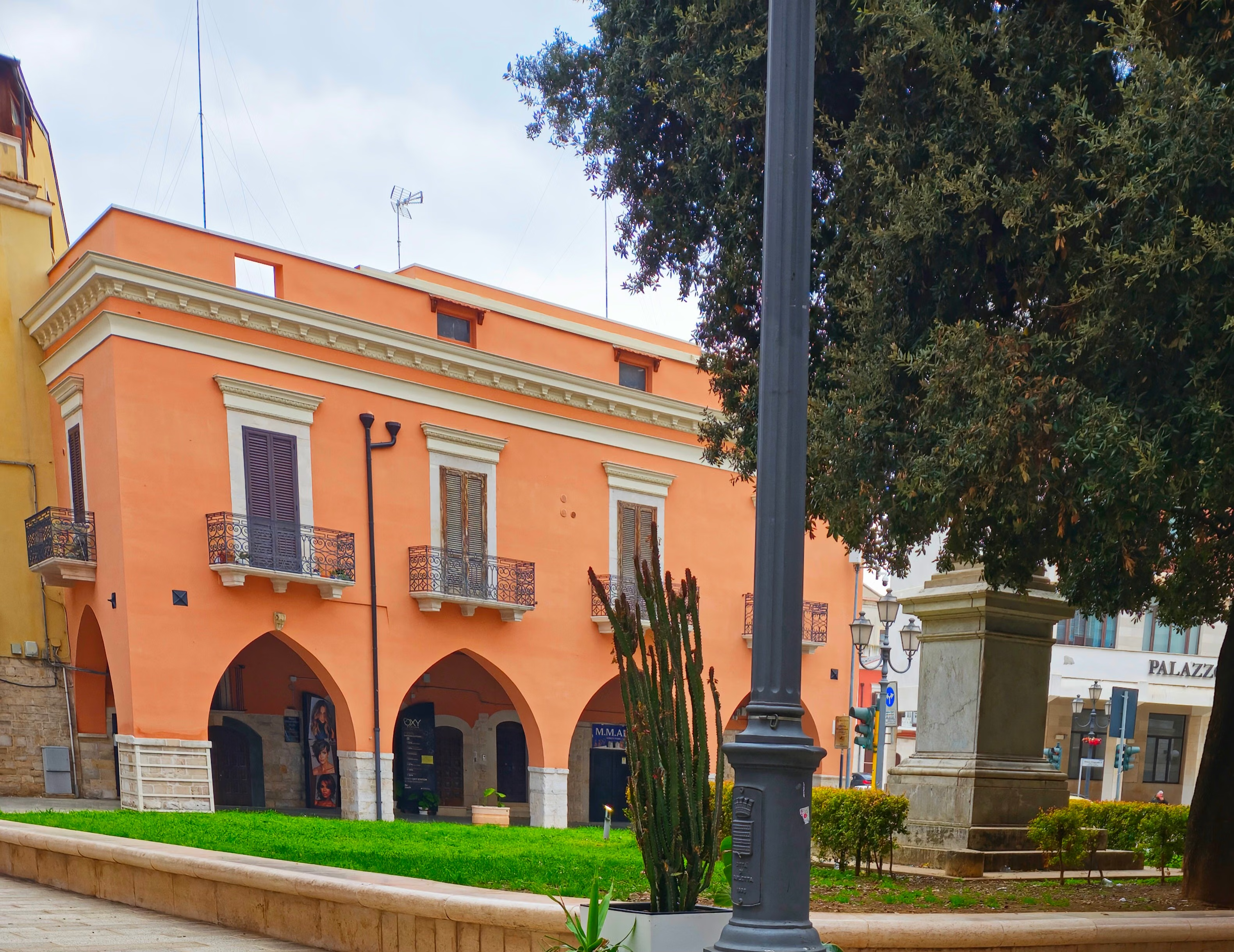
1. Barletta's Two and a Half Courses: the Heart of the City
There are streets that simply cross a city and others that, in some way, tell the story of the city. In Barletta, this is particularly evident along its two and a half main courses: Corso Vittorio Emanuele, Corso Garibaldi and Corso Cavour, the latter also historically known as Via Cavour.
In just over a kilometre, visitors encounter some of Barletta's best-known landmarks: churches, historic palaces, shops, cafés, theatres and monuments that bear witness to centuries of history. These streets connect the oldest part of the city with the neighbourhoods that developed later and still represent important reference points for both residents and visitors.
Walking along these three main routes means moving, almost without noticing, from medieval Barletta to the nineteenth-century city, from major monuments to commercial activity, and from traces of the old city walls to everyday life in the city centre.

2. Corso Vittorio Emanuele: the Street of the Great Monuments
If there is one street that many people immediately associate with the centre of Barletta, it is Corso Vittorio Emanuele. It is one of the city's most representative avenues and concentrates some of the monuments that most strongly define Barletta's identity.
The best-known section is where the Basilica of the Holy Sepulchre, the Colossus of Barletta and the Giuseppe Curci Municipal Theatre can be found. This sequence makes the walk particularly interesting: within just a few hundred metres, visitors encounter architecture and historical evidence from very different periods.
The Colossus, the large bronze statue known by the people of Barletta as Arè, is one of the symbols of the city. Nearby stands the Curci Theatre, inaugurated in 1872 and named after the Barlettan composer Giuseppe Curci. The theatre faces directly onto the corso and contributes to its elegant nineteenth-century character.
Continuing along Corso Vittorio Emanuele, visitors also encounter the City Hall, the San Giacomo area and the Clock Tower. It is also one of the streets most closely connected to everyday city life: shops, bars and businesses coexist with historic buildings and monuments.

3. Corso Garibaldi: the Road Leading towards the Ancient Heart of the City
Corso Giuseppe Garibaldi has a different character from Vittorio Emanuele, but it is equally important for understanding Barletta's urban history. Its route is part of one of the ancient roads that connected the city with Canosa di Puglia.
In the past, this street was known as via della Selleria, a name associated with the crafts and commercial activities related to saddle making. Today, the corso remains one of the main axes of the city centre and leads visitors towards the oldest part of Barletta.
Along Corso Garibaldi there are historic palaces, businesses and places of interest. Among the most significant buildings is Palazzo Marulli, which is also connected with the history of the Napoleonic period. Further along, the route approaches the area around the Basilica of the Holy Sepulchre and the network of streets leading towards the historic centre.
One of the most interesting aspects of Corso Garibaldi is precisely its role as a connection. On one side it leads towards the more modern city; on the other, it gradually enters ancient Barletta, where the streets become more intimate and the lanes of the Santa Maria district begin.
It is a street worth walking along without rushing, paying particular attention to the details of the façades, doorways and historic buildings that tell the story of the city's transformation over the centuries.

4. Corso Cavour: the Ancient Strada del Cambio
The third axis is what we know today as Corso Cavour, although the name Via Cavour also frequently appears in historical sources and official toponymy. It completes the route formed by the two main courses of the historic centre.
Its former name is particularly interesting: it was once known as “Strada del cambio”, or “Exchange Street”, because activities related to currency exchange were concentrated along this route. This is evidence of Barletta's involvement in the trade and commercial networks that connected the Adriatic coast with southern Italy.
Today, Corso Cavour still features an important concentration of historic palaces. One of the most interesting is Palazzo Esperti, a noble residence dating back to the fifteenth century, which dominates the corso with its broad façade. The building retains architectural elements that reflect the various transformations it underwent over the centuries.
Along this section there are also Palazzo de Leone-Pandolfelli, Palazzo del Gran Priore and other historic buildings, while the route gradually leads towards the Swabian Castle. It is therefore more than just a passageway: it is a genuine connection between the urban centre and the oldest part of Barletta.
Here, the commercial character of the modern city gradually gives way to the older atmosphere of the historic centre. Once you reach the intersection with Corso Garibaldi, you can take Via Duomo and find yourself in the heart of the Santa Maria district.

5. Why Barletta's Two and a Half Courses Tell the City's Story Better Than a Map
On a map, Corso Vittorio Emanuele, Corso Garibaldi and Corso Cavour may appear to be simply three streets in the city centre. Once you walk along them, however, their importance becomes much more apparent.
The three axes form a kind of journey through Barletta's urban history. Corso Vittorio Emanuele leads past some of the city's most famous monuments; Corso Garibaldi takes visitors towards the old district and retains the character of an ancient commercial route; Corso Cavour, meanwhile, reflects the city's mercantile tradition through the historic Strada del cambio and its many noble palaces.
This is also why a walk through central Barletta should not be limited to a single square or monument. The best way to capture the city's atmosphere is often the simplest: walk, look at the façades, cross the courses and let the intersections guide you towards the historic centre.
A simple itinerary can begin on Corso Vittorio Emanuele, continue towards Corso Garibaldi and reach the intersection with Corso Cavour. From here, you can enter the old district through Via Duomo and continue to the Cathedral of Santa Maria Maggiore and the Swabian Castle.
6. Frequently Asked Questions about Barletta's Main Courses
The expression “two and a half courses” refers to the three main axes of the historic centre: Corso Vittorio Emanuele, Corso Garibaldi and Corso Cavour, the latter also known as Via Cavour.
Corso Vittorio Emanuele is one of the city's most representative avenues and is home to some of Barletta's best-known monuments, including the Colossus, the Basilica of the Holy Sepulchre and the Curci Theatre.
Via Cavour was historically known as “Strada del cambio” because activities related to currency exchange were concentrated along this route. The street still features numerous historic palaces and connects the city centre with the castle area.
Major points of interest include the Colossus of Barletta, the Basilica of the Holy Sepulchre, the Giuseppe Curci Municipal Theatre, City Hall and the area around the Church and Clock Tower of San Giacomo.
A good starting point is Corso Vittorio Emanuele, from where you can reach Corso Garibaldi and Corso Cavour before entering the old district through Via Duomo.